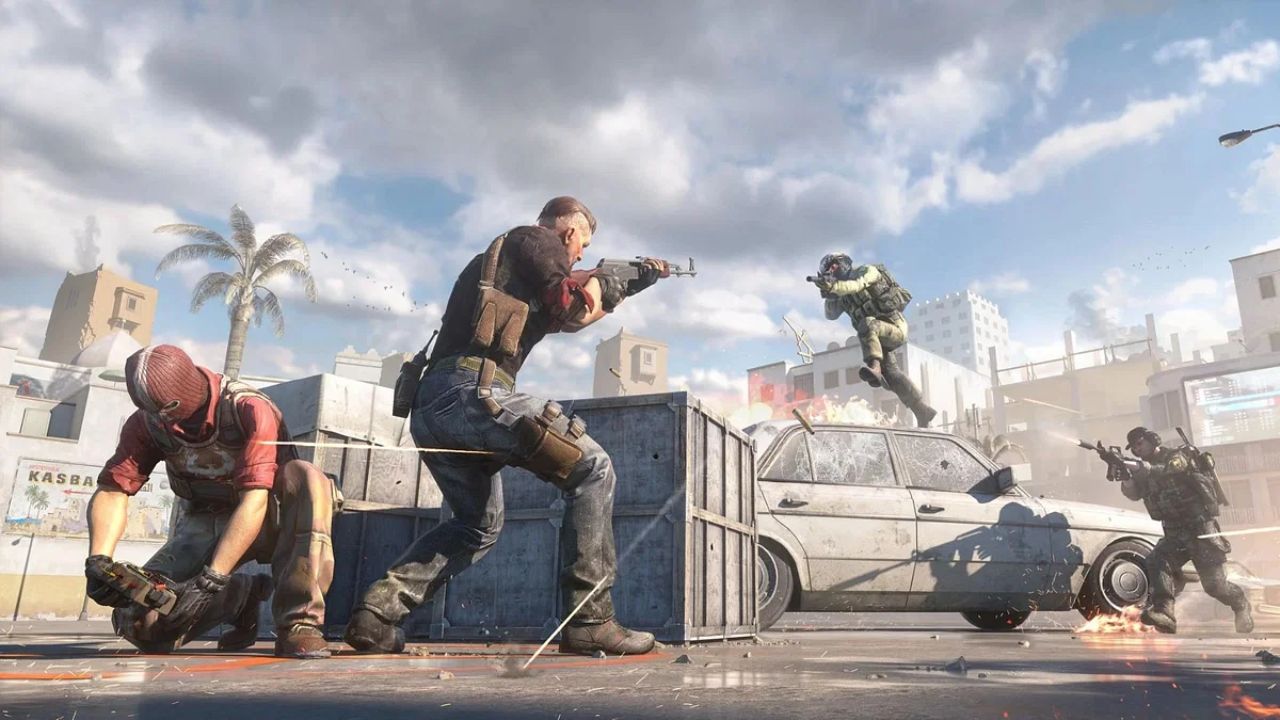
Top 10 Settings to Enhance CS2 FPS for an Optimal Gaming Experience
When it comes to maximizing your CS2 FPS for an optimal gaming experience, settings play a crucial role. By fine-tuning your graphics settings, you can achieve a smoother gameplay experience that not only enhances your performance but also allows you to fully immerse yourself in the game. Here are the top 10 settings to consider:
- Resolution: Lowering your resolution can significantly boost your FPS. Consider playing at a 16:9 aspect ratio while reducing the resolution to 1280x720.
- Graphics Quality: Set your graphics quality to 'Low' to increase performance without sacrificing too much in visuals.
- Texture Filtering: Opt for Bilinear filtering instead of Trilinear to save on resources.
- V-Sync: Disable V-Sync to prevent input lag and increase your frames-per-second.
- Anti-Aliasing: Turn off anti-aliasing for a sharper image and better performance.
- Shadow Quality: Lower shadow quality to 'Low' or 'Off' to improve frame rates.
- Ambient Occlusion: Disabling this feature can also lead to significant FPS improvements.
- Field of View: Adjusting your FOV can optimize your view while aiding performance.
- Render Scale: Reducing your render scale can provide a big boost to FPS.
- Game Mode: Make sure to enable 'Game Mode' in Windows settings for better overall performance.
Counter-Strike is a highly popular tactical first-person shooter game that focuses on team-based gameplay. Players can choose to be part of the Counter-Terrorists or Terrorists, engaging in missions that require strategy and coordination. One of the favorite weapons among players is the P90, known for its rapid fire and large magazine capacity, making it a formidable choice in close combat scenarios.
The Ultimate Guide to Boosting CS2 Performance: Tips and Tricks for High FPS
In the world of competitive gaming, achieving high FPS (frames per second) can significantly enhance your gaming experience, especially for players of CS2. To ensure that you are maximizing your system's potential, start by optimizing your graphics settings. Lowering the resolution and turning off resource-demanding options like motion blur and shadows can have a profound impact on performance. Additionally, make sure your system's drivers, especially your graphics card drivers, are up to date. You can further boost FPS by overclocking your GPU and CPU, provided your hardware supports it. Remember, each system is unique, so be sure to monitor temperatures and stability after making any changes.
Another critical aspect of improving CS2 performance is managing background processes. Before launching the game, it’s advisable to close unnecessary applications that are consuming RAM and CPU resources. You can achieve this by using the Task Manager on Windows to terminate non-essential processes. Moreover, consider using software tools designed for gaming performance, such as Game Mode or other FPS boosters that can free up system resources automatically. Lastly, adjusting in-game settings like reducing the FOV (field of view) and setting up a proper resolution scaling can help you maintain a competitive edge while ensuring smooth gameplay with higher FPS.
Common Causes of Low FPS in CS2 and How to Fix Them
Low frames per second (FPS) in CS2 can be frustrating and can significantly affect your gaming performance. Several factors can contribute to poor performance, including insufficient hardware specifications, outdated drivers, and background applications consuming valuable resources. Common causes often include high graphics settings that exceed your system's capabilities, as well as network issues that can lead to lag and stuttering. To identify the underlying reasons for low FPS, it's essential to assess your system's hardware and check for any software bottlenecks.
To fix low FPS issues in CS2, consider the following steps:
- Update your graphics drivers: Keeping your drivers up-to-date can optimize performance and fix bugs.
- Adjust graphics settings: Lowering settings such as texture quality, shadow detail, and anti-aliasing can help improve FPS.
- Close background applications: Ensure that unnecessary programs are shut down to free up system resources.
- Upgrade hardware: If possible, consider upgrading your RAM or graphics card for a noticeable performance boost.